Learning Bites: Serving Up Gamified Micro-Learning
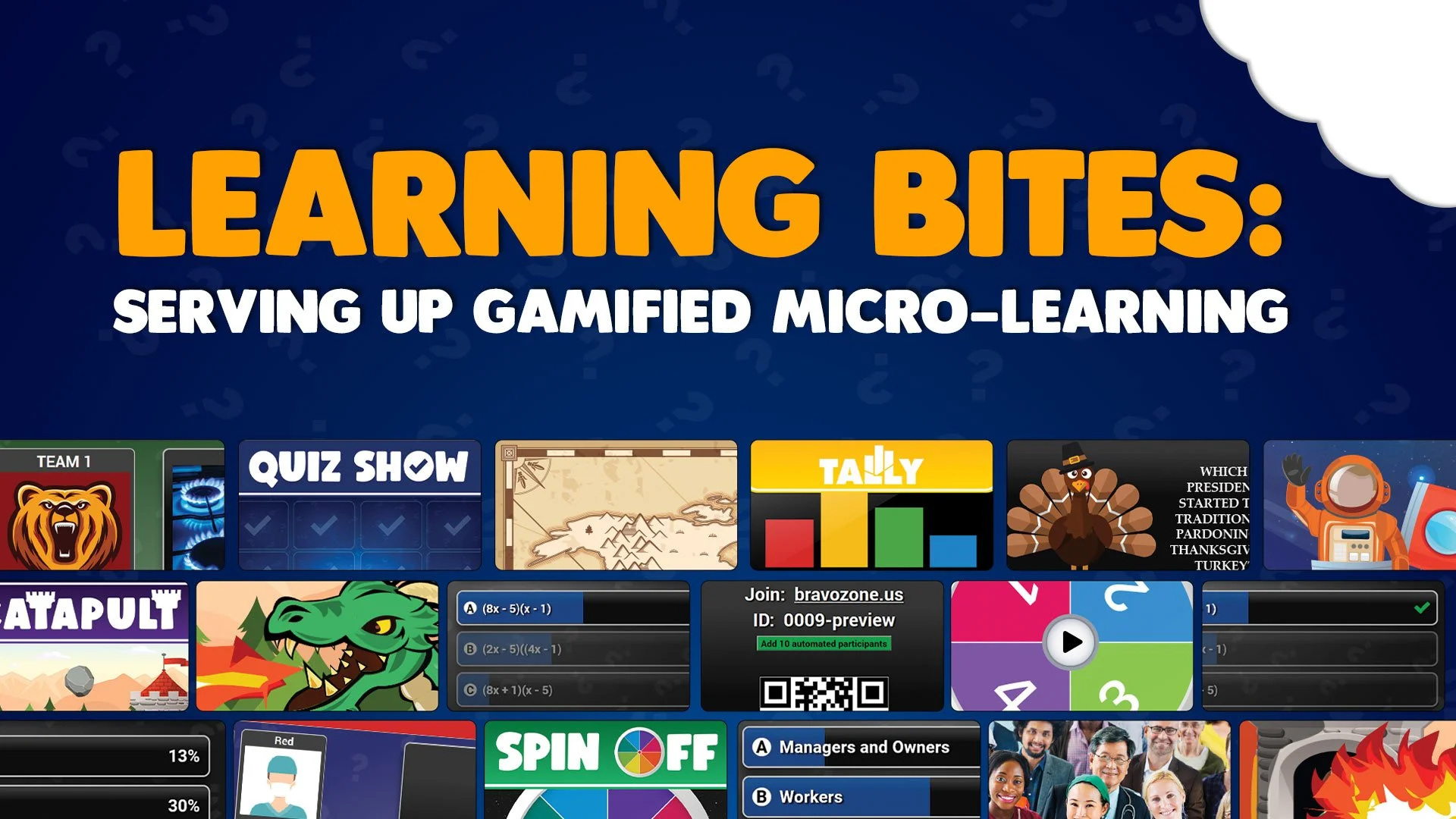
Learning Bites: Serving Up Gamified Micro-Learning
We’ve all been there: sitting through a long, dense presentation, only to face a massive 50-question quiz at the very end. It feels less like learning and more like a test of endurance. There is a far more effective way to engage trainees: chunking heavy information into menu-ready, digestible "Learning Bites."
Instead of saving the review for the end, the secret is chunking information into small, digestible interactive mini-games. These mini-games serve to help you maintain high energy, reinforce key concepts in real-time, and provide instant knowledge checks right when they matter most.
The "Learning Bites" Menu: 4 Gamified Mini-Games
Here’s where BRAVOZONE comes in. Instead of treating review as a dry, post-lecture chore, BRAVOZONE lets you seamlessly build custom micro-games directly into your slides.
The result? On-the-spot remediation. You can immediately see what your audience understands, address confusing points in real time, and adjust your pace—all without breaking the flow.
Here are four practical micro-game templates you can plug into your next session:
Bite 1: The Visual AI Challenge (Icebreaker & Observation)
The Pitch:
Abstract concepts like AI can get dry fast. Starting with a quick visual game forces trainees to actively inspect content from minute one.
How It Works:
Show a side-by-side comparison (Real vs. AI) or present a single photo, asking attendees to spot subtle artifacts—like distorted hands, warped backgrounds, or jumbled text.
Sample Question #1 (Hotspot):
AI made this image, but it left behind some evidence. Can you find and tap the subtle flaws hidden in the photo?

Sample Question #2 (Hotspot):
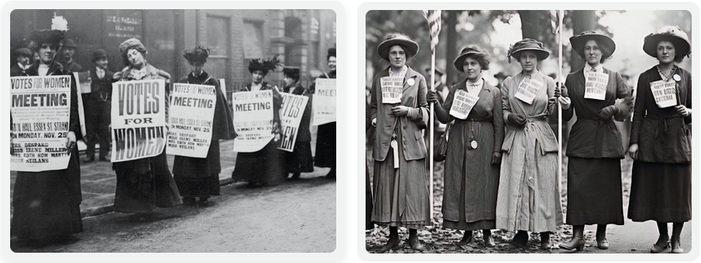
Real or AI? Can You Tell the Difference? This question contains one real image and one that is AI-generated. Select the real image:
The "Aha!" Moment:
When you reveal the answer, show an annotated key pointing out dead giveaways—like blurred earlobes or distorted sign lettering—turning a simple guess into a memorable learning moment.
Why it Works:
It taps into curiosity, sharpens observation skills, and gets people actively debating before you dive into the core content.
Ready To See it in Action?
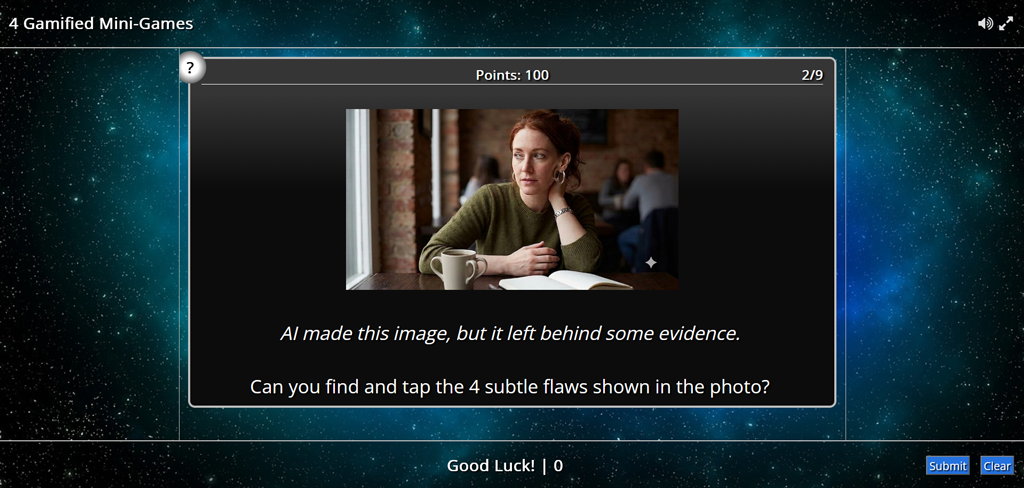
Experience first-hand how these questions will look like in a game, keeping your audience engaged, energized, and actively learning in real time.
👉PLAY 4 Gamified Mini-Games
Bite 2: "Betting" on Outcomes (Risk Evaluation)
The Pitch: Micro-games excel at evaluating real-world risks by turning static scenarios into active, high-stakes decision-making moments.
How It Works: Pose a real-world "What would you do?" safety scenario using interactive polling to safely highlight differing risk perspectives.
Sample Question (Polling / Multiple Choice):
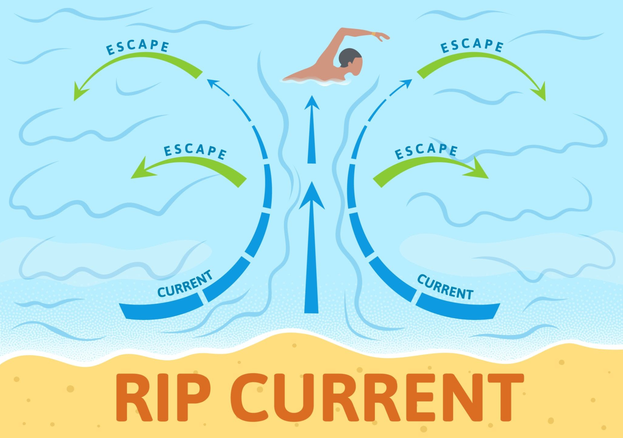
You are swimming at the beach, waist-deep in the water. The shoreline recedes rapidly, and a powerful rip current carries you out to sea at 8 feet per second. What do you do to survive?
A) Swim directly back toward shore with maximum effort.
B) Swim parallel to the shoreline until clear of the current, then head to land.
C) Tread water, let the current carry you out, and signal for help.
D) Dive deep under the surface to catch the incoming floor current.
The Key Takeaway:
Option A is the #1 cause of fatal drowning incidents. Highlighting common but dangerous instincts before revealing the correct answer (Option B) creates cognitive dissonance that sticks with learners long-term.
Why it Works:
It turns a standard poll into a game of risk and reward, highlighting differing viewpoints in a safe environment.
Ready To See it in Action?
Experience first-hand how these questions will look like in a game, keeping your audience engaged, energized, and actively learning in real time.
👉PLAY 4 Gamified Mini-Games
Bite 3: The "Next Step" (Predicting the next step)
The Pitch:
Skipping a single step in a process can cause operational failure. Gamifying procedural steps tests whether employees can apply knowledge in sequential, high-pressure environments.
How it Works:
Provide a scenario with one critical missing action and have trainees identify the correct next move.
Sample Question (Multiple Choice):
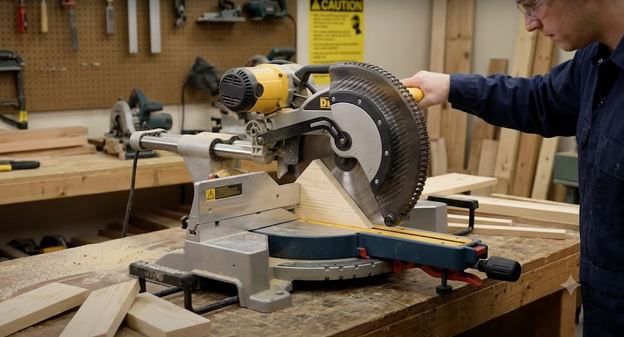
A scrap of wood jams a running miter saw. You hit the power switch and wait for the blade to stop. What is the absolute next step before placing hands near the blade?
A) Put on thick, cut-resistant work gloves.
B) Unplug the saw from the wall outlet or disconnect its battery pack.
C) Inspect the surrounding guard for damage.
D) Use a shop vacuum to clear sawdust around the blade.
The Key Takeaway:
Turning off a switch does not equal a zero-energy state—disconnecting the power source (Option B) is mandatory. (Bonus: Never wear gloves near spinning blades; fabric can drag hands in!)
Ready To See it in Action?
Experience first-hand how these questions will look like in a game, keeping your audience engaged, energized, and actively learning in real time.
👉PLAY 4 Gamified Mini-Games
Bite 4: Fact or Fiction Mythbuster (Unlearning Misconceptions)
How it Works:
Micro-learning isn't just about absorbing new rules; it’s one of the best tools to uproot sticky industry myths.
Why it Works:
Present a widely believed myth and require participants to cast an immediate "Fact" or "Fiction" vote.
Sample Question (True/False Polling):
Fact or Fiction? A stopped heart can be restarted with a defibrillator shock.

Fact
Fiction
The Key Takeaway: Fiction. Defibrillators reset chaotic, irregular heart rhythms (arrhythmia); they cannot restart a heart with zero electrical activity.
Ready to Level Up Your Next Training Session?
Micro-games don't just break up the monotony—they transform passive listeners into active participants. Whether you're running a 5-minute icebreaker or reviewing strict safety protocols, embedding short, interactive moments ensures your message actually sticks.